
The Shadow Planet: Recreating Retro-futuristic Horror
A graphic novel that tries to bring back the older style of exploitation movies.

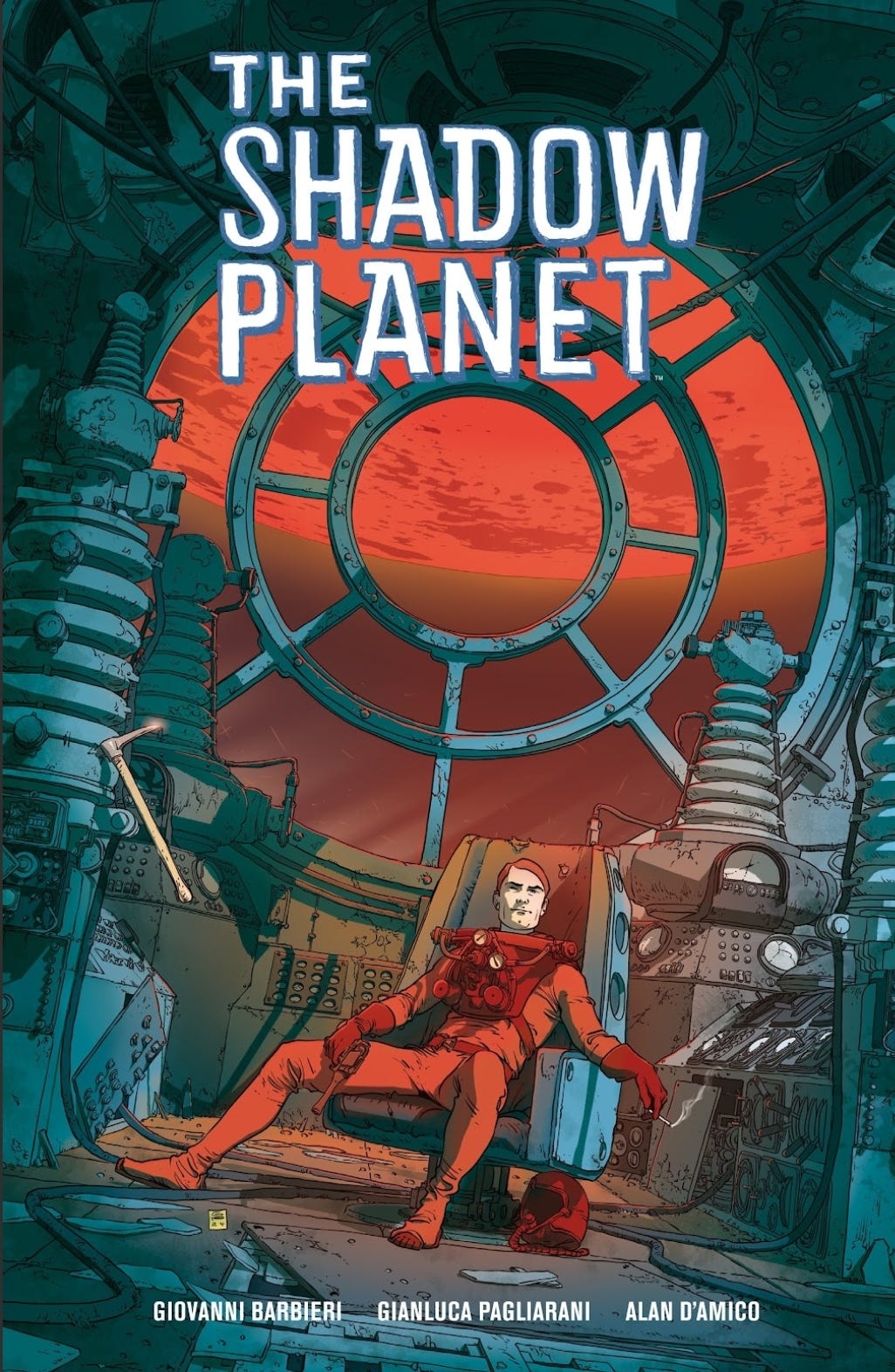
What's the defining quality of a crew of space explorers if they are in a B-movie? They should be incompetent and emotionally immature. Their psychological profiles should make them not even fit for the customer support of a counterfeit electronic company, let alone space exploration. The Shadow Planet is a graphic novel 'conceived as the comic book version of a B movie that was never made.' So, in order to enjoy it fully, one has to keep their expectations low about matters pertaining to believable and professional interactions between the crew.
The book opens with a violent dream sequence that the commander of the ship has while sleeping with a crew member. When they receive a distress signal from a schooner that was supposed to be destroyed on a lonely planet thirty years ago, four of the crew land on the planet to investigate and find an active robot and a young girl in hibernation, who claims that the fog outside makes people mad. Soon there are murders, and the remaining members have just themselves to suspect.
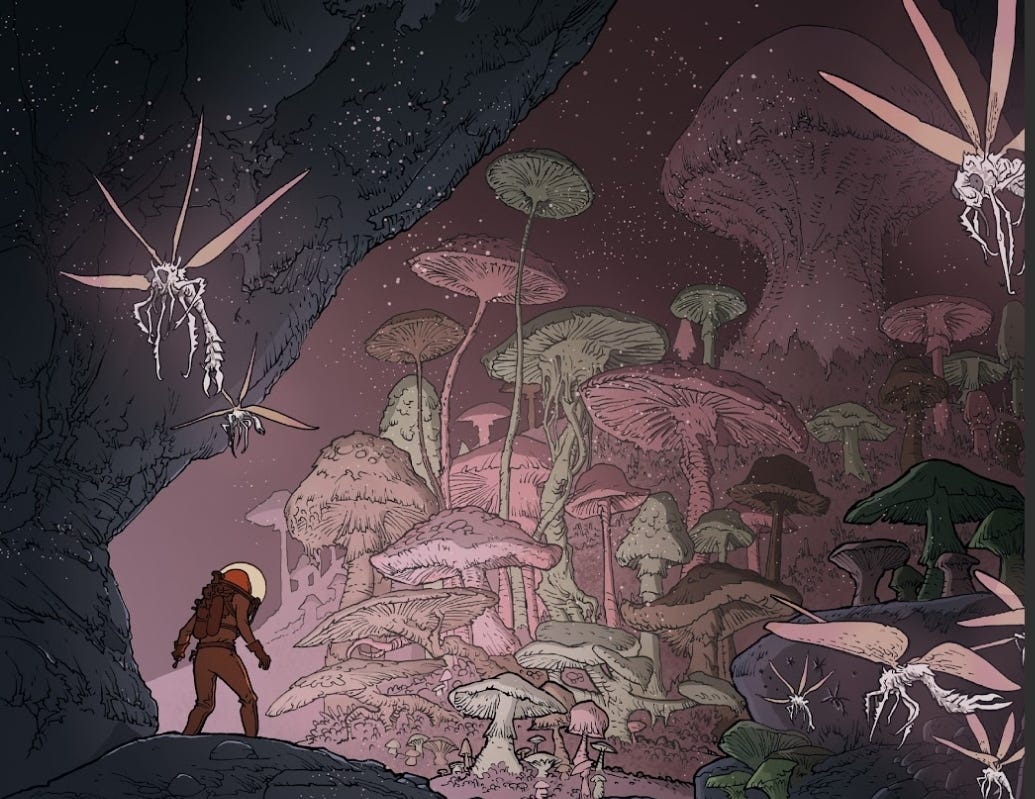
The Shadow Planet, published in 2025 by Image Comics, is written by Giovanni Barbieri and drawn by Gianluca Pagliarani. It was first published in Italian in 2017. The book begins as a science fiction adventure but soon transforms into a Lovecraftian body horror tale where an alien creature hunts the stranded crew while they try to escape the planet. But don't expect the sophistication of Alien. Imagine a more exploitative, low-budget film like Ghosts of Mars or Pitch Black, which were solidly entertaining in their own right.
The narrative does not follow a certain point of view and rather uses an omniscient narrator. It suits the tone and also helps to effectively communicate the tension between the characters due to the complex relationships between them, where everyone seems to hide some aspects of themselves from others. More than the claustrophobic effect and scare that such a situation should highlight, I think the element of distrust and the resulting tension become prominent.
The lack of visceral scare in the narrative is compensated to a certain extent by the glorious artwork. It reminds us of the pulpy aesthetics of the seventies and eighties, when cheaply dubbed European movies and comics were prevalent. The art is very detailed and expansive, especially while depicting the lonely landscape and the mysterious architectural sites on the planet. The liberal portrayal of violence, nudity, and horror adds to the retro effect that it wants to achieve. I believe the element of claustrophobia that should be imminent inside the abandoned spaceship was not as strongly felt, possibly due to the emphasis on wider frames. The lettering also felt a bit excessive and cluttered the frames.
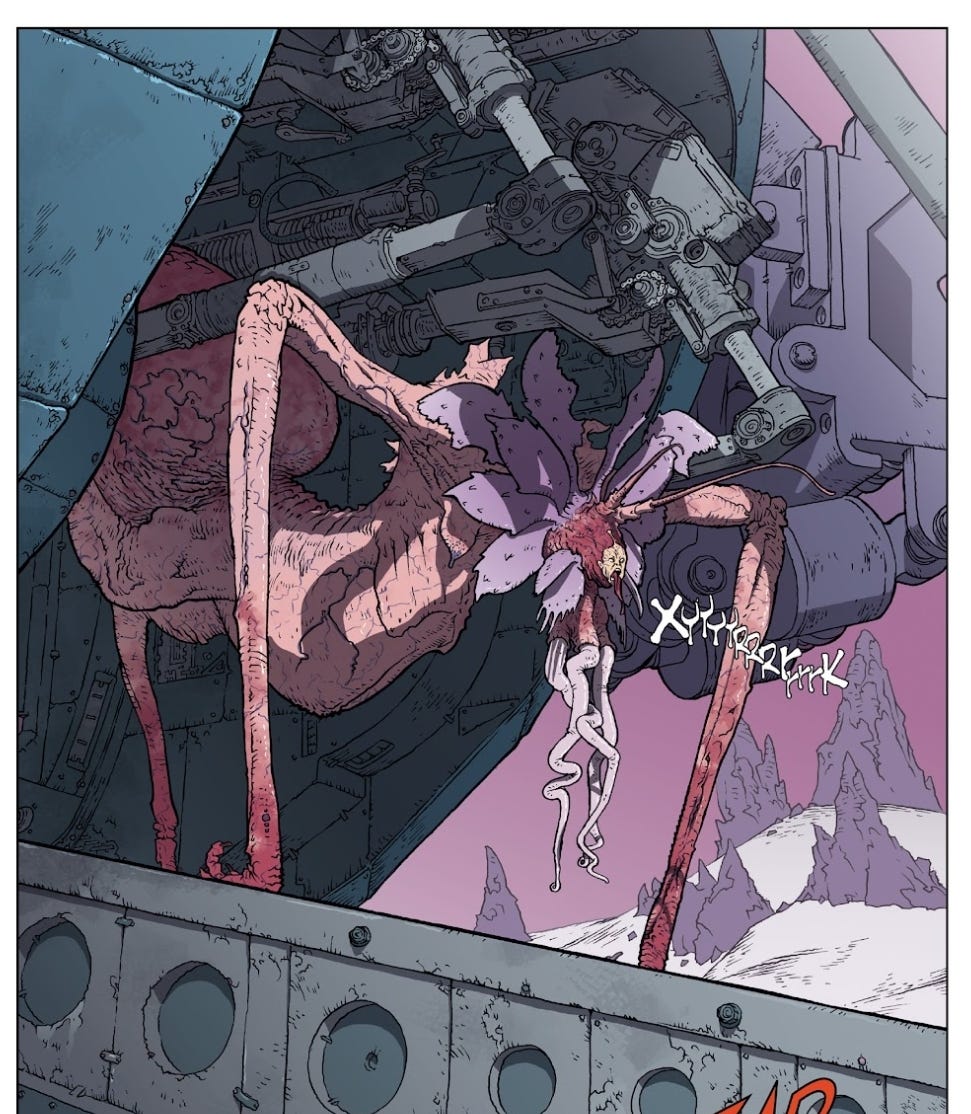
The narrative and the artwork of the book are built on cliches but still manage to work because of the powerful atmosphere, sufficient jump scares, and the tense character dynamics they portray. The Shadow Planet is excellent entertainment for those who miss the B-grade aesthetics of the European exploitation films of the past. Those who are looking for works that redefine the medium better stay away.